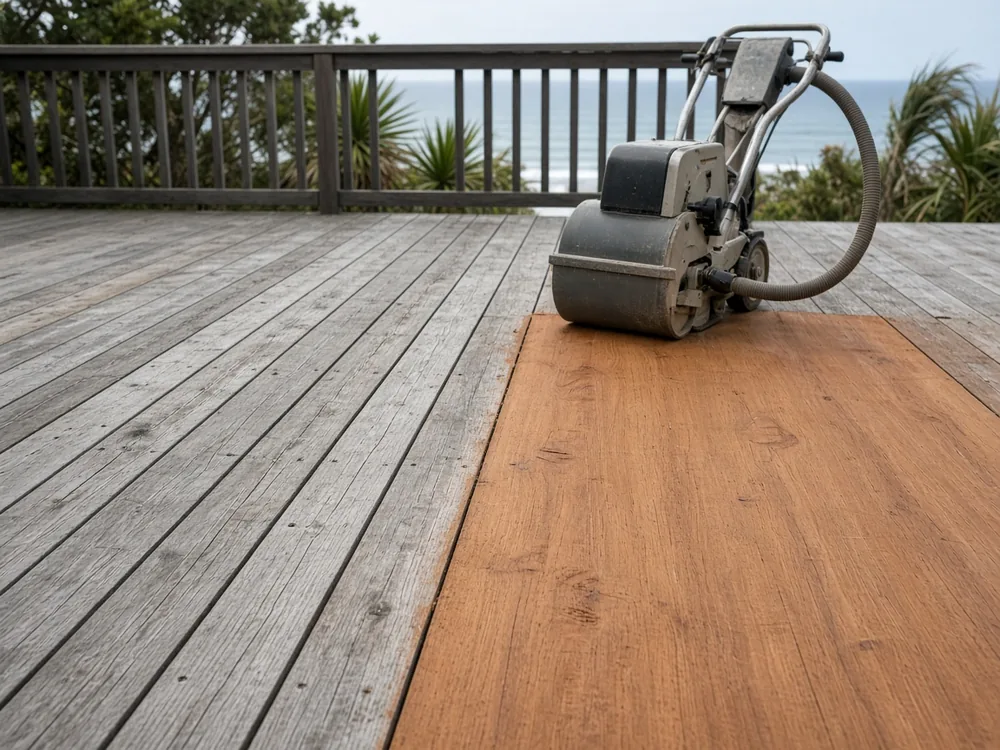
Why coatings peel
Film-forming acrylic stains and paints sit on top of the timber. Once moisture gets underneath, they lift and flake, and new coats on top usually fail the same way. Penetrating oils soak in instead and tend to wear rather than peel.
What’s usually involved
- ✓Chemical stripping where the coating is thick
- ✓Coarse sanding to remove what’s left
- ✓Finer sanding for a smooth finish
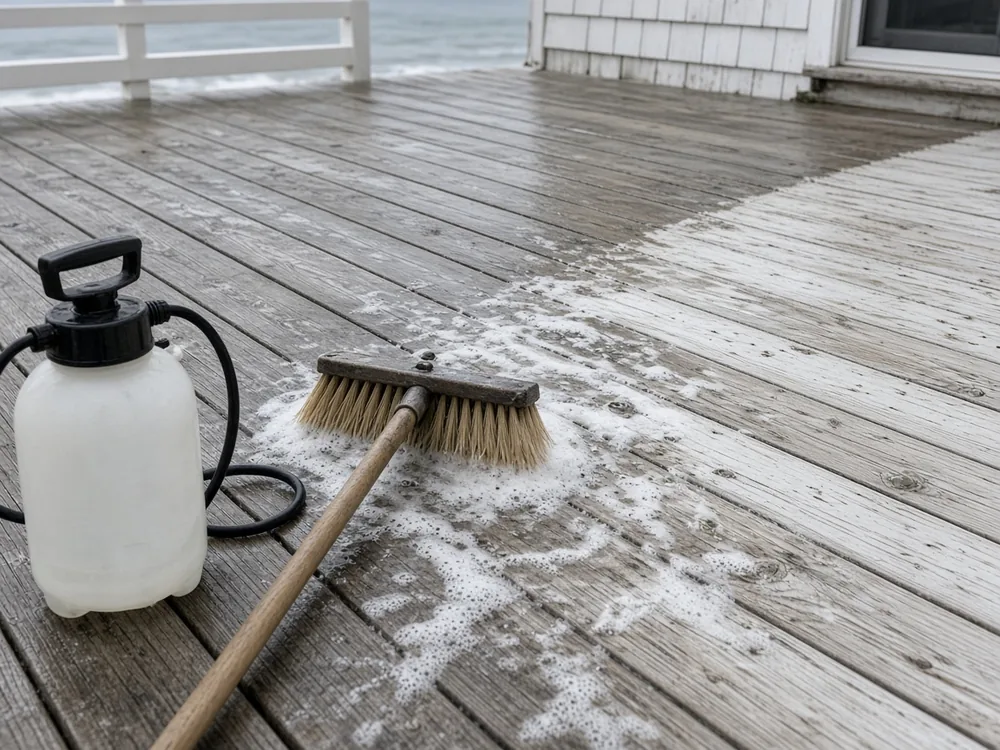
- ✓Cleaning and drying
- ✓Refinishing with a penetrating oil or the coating you choose
Typical cost
As a guide, full mechanical sanding back to bare timber plus 3 coats of trade decking oil typically ranges from $45 to $75 per square metre, depending on the existing coating (acrylic paint and stain take longer to strip than oil), stairs and handrails. Your specialist will give you a firm price after seeing the deck. Thick acrylic or painted coatings sit at the higher end because they take longer to strip.
Coastal conditions to keep in mind
Salt air, strong UV and summer heat on the Illawarra coast break down deck coatings faster than inland. North- and west-facing decks and decks close to the beach usually need more frequent maintenance. Follow the oil maker’s guidance on recoat intervals and on drying time, and avoid coating in rain, dew or full midday sun.
Frequently Asked Questions
Why does stripping cost more than sanding an oiled deck?+
Acrylic paint and stain clog sanding paper and often need chemical stripping first, so it takes longer.
Can I go back to an oil finish after paint?+
Usually, once the paint is fully removed and the timber is back to bare wood. Some pigment may remain deep in the grain.
How Shellharbour Deck Care works
Shellharbour Deck Care is a lead-matching service connecting Illawarra and South Coast homeowners with independent timber deck restoration specialists. We don’t do the work ourselves. The specialist you’re matched with quotes, carries out and is responsible for the job, so ask them about insurance, the products they use and any warranty before you go ahead.